
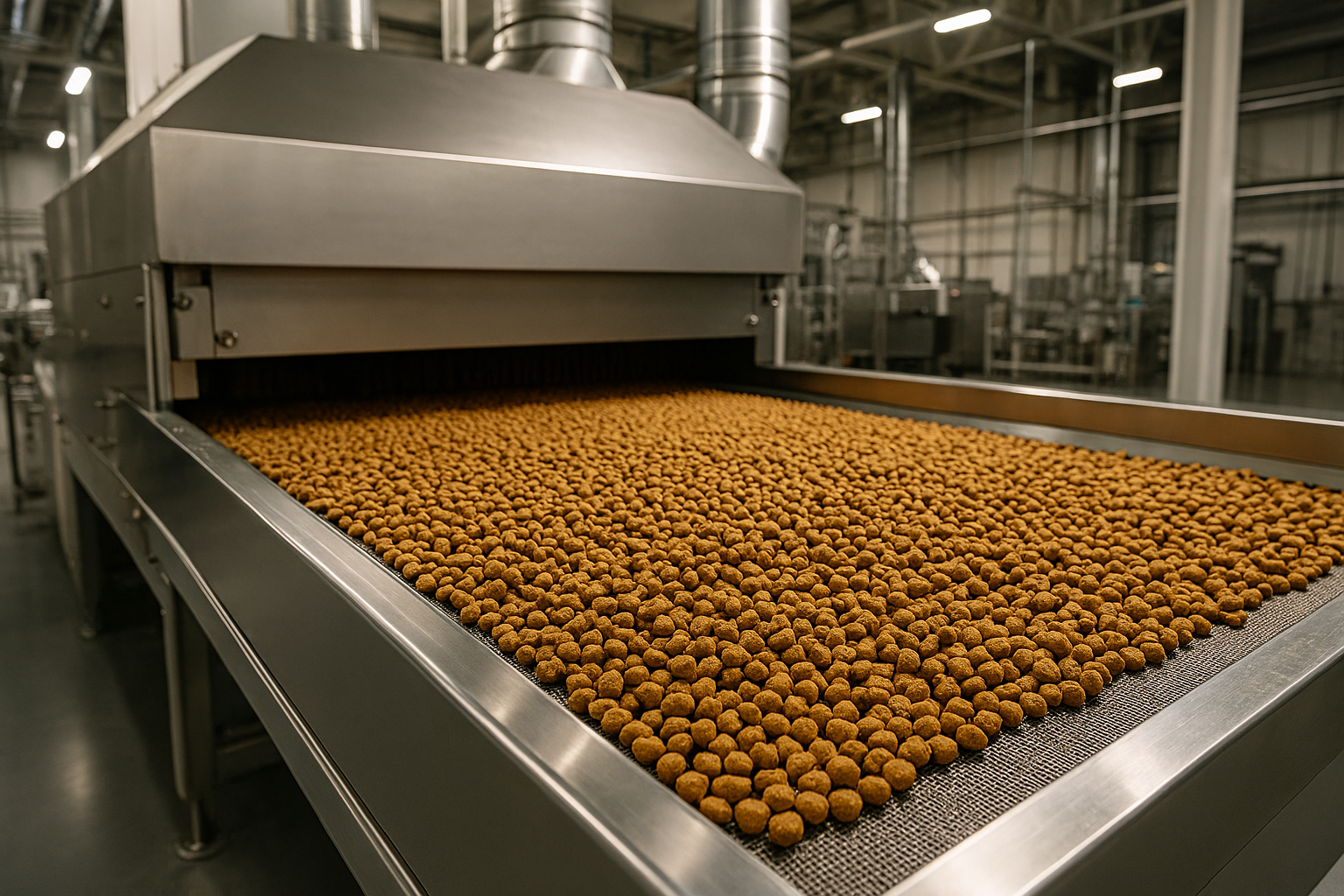
How Kibble is Made; From A Pet Nutritionist
Dry pet food, commonly known as kibble, is the most widely fed type of pet food in the world. Millions of dog and cat owners rely on kibble because it is convenient, shelf stable, affordable, and nutritionally complete when properly formulated. While kibble may appear to be simple brown nuggets, the process of manufacturing dry pet food is a sophisticated combination of nutrition science, food engineering, and quality control.
Modern kibble production involves careful ingredient selection, precise formulation, advanced cooking technology, and strict safety testing. Each step plays a critical role in ensuring that the final product meets the nutritional needs of dogs and cats while remaining safe and stable for long term storage.
As someone who is a certified pet nutritionist and has worked in the pet food industry, I will explain how kibble is actually made, from raw ingredients on the farm to the final packaged pet food found on store shelves.

The Basic Steps of Kibble Production
Although kibble may seem like a simple pet food, its production involves a highly structured manufacturing process designed to ensure nutritional consistency, safety, and shelf stability. Modern pet food facilities use specialized equipment and strict quality control procedures to transform raw ingredients into the dry, crunchy pieces that dogs and cats eat every day.
At a high level, kibble production follows a series of key steps. Each stage plays an important role in creating a finished product that is nutritionally balanced, digestible, and safe for pets to consume.
The basic steps of kibble production include:
1. Ingredient sourcing and formulation
2. Grinding and mixing
3. Preconditioning and extrusion cooking
4. Shaping and cutting
5. Drying and cooling
6. Coating and flavor enhancement
7. Quality testing and packaging
Understanding these steps helps illustrate the amount of science and technology involved in producing a nutritionally complete kibble diet. Each stage is carefully controlled to ensure the final product meets strict standards for pet nutrition and food safety.

Ingredient Selection and Nutritional Formulation
Every pet kibble begins with a carefully designed formulation created by animal nutritionists, like myself. These formulations must meet established nutrient standards for dogs or cats at different life stages, such as growth, adult maintenance, or senior nutrition.
In North America, many pet foods are formulated to meet guidelines established by the Association of American Feed Control Officials (AAFCO). These nutrient profiles ensure that pets receive adequate levels of protein, fats, vitamins, minerals, and essential fatty acids.
A typical kibble recipe contains several categories of ingredients that work together to provide balanced nutrition and proper kibble structure.
Protein Sources
Protein is one of the most important nutrients in pet food. It supports muscle development, immune function, skin health, and many metabolic processes.
Common protein sources used in kibble include:
- Fresh meats such as chicken, beef, turkey, or fish
- Meat meals such as chicken meal or lamb meal
- Organ meats such as liver or heart
- Plant proteins such as soybean meal or corn gluten meal
Meat meals are commonly used in kibble because they contain concentrated protein and lower moisture compared to fresh meat, making them easier to incorporate into dry food formulations.
Carbohydrates
Carbohydrates play a key functional role in kibble production. While pets do not require carbohydrates in large amounts, starches are necessary for the extrusion process that gives kibble its structure and shape. It also serves a small nutritional purpose as it helps to keep pets feeling full and provides a source of energy.
Common carbohydrate sources include:
- Corn
- Wheat
- Rice
- Barley
- Oats
- Peas
- Lentils
- Potatoes or sweet potatoes
During processing, starches gelatinize and help create the expanded, crunchy texture that kibble is known for.
Fats and Oils
Fats provide concentrated energy and supply essential fatty acids that support skin health, brain function, and coat quality.
Typical fat sources include:
- Chicken fat
- Beef tallow
- Fish oil
- Sunflower oil
- Canola oil
- Flaxseed oil
Fats also contribute to flavor and palatability, making food more appealing to pets.
Fiber Sources
Fiber supports digestive health and helps regulate stool quality. It can also contribute to satiety and weight management. Like carbohydrates, fibre also serves to support the form and structure of the kibble.
Common fiber ingredients include:
- Beet pulp
- Pea fiber
- Cellulose
- Oat fiber
- Pumpkin or vegetable fibers
Vitamins and Minerals
Because many nutrients can be lost during processing, pet food manufacturers add a carefully designed vitamin and mineral premix to ensure the final diet remains nutritionally complete.
These premixes typically include:
- Calcium and phosphorus for bone health
- Zinc and copper for immune and skin health
- Vitamin A, D, and E
- B vitamins for metabolism
- Trace minerals such as selenium and iodine
Pet food formulators must carefully balance these nutrients to meet regulatory guidelines and prevent deficiencies or excesses.

Grinding and Mixing of Ingredients
Once ingredients are selected, they must be processed into a uniform consistency before cooking.
Dry ingredients such as grains, meals, and fibers are first ground into fine particles using industrial hammer mills. Grinding reduces particle size and creates a flour like consistency.
Fine grinding serves several important purposes:
- Improves mixing uniformity
- Enhances cooking efficiency
- Allows starches to gelatinize properly during extrusion
- Helps control the expansion and texture of kibble
After grinding, all dry ingredients are blended together in large industrial mixers. Liquid components such as water may be added during this stage to create a uniform mash. However, fats and flavor coatings are typically added later in the process.
Proper mixing ensures that every kibble piece contains consistent nutrient levels.
Extrusion: The Core of Kibble Manufacturing
Extrusion is the most important step in dry pet food production. This process transforms the raw ingredient mixture into cooked, expanded kibble pieces.
Extrusion combines heat, pressure, moisture, and mechanical force to cook ingredients rapidly while shaping them into specific forms.
Preconditioning
Before entering the extruder, the mixed mash passes through a preconditioner. In this chamber, steam and water are added while paddles gently mix the ingredients.
Preconditioning performs several important functions:
- Hydrates the ingredients
- Begins cooking the starches
- Improves digestibility
- Reduces stress on the extruder
During this step, starch gelatinization begins and proteins start to denature.
Cooking in the Extruder
The hydrated mash then enters the extruder barrel. Inside the barrel, a rotating screw pushes the mixture forward while compressing and heating it.
Temperatures inside the extruder often reach 120 to 150°C (250 to 300°F). At the same time, pressure and friction increase as the material moves through the barrel.
The cooking temperature and short time cooking process:
- Fully cooks starches
- Denatures proteins
- Improves nutrient digestibility
- Destroys harmful bacteria such as Salmonella
Despite the high temperatures, the exposure time is very short, often less than a minute.
Shaping the Kibble
At the end of the barrel, the dough is forced through a “die”—a metal plate with holes that determine the kibble’s shape (circles, stars, etc.). As the dough exits the high-pressure barrel into the normal atmosphere, the steam flashes off, causing the kibble to “puff” or expand. Rotating knives then cut the moving dough into individual nuggets.
As the dough exits the high pressure environment of the extruder, the sudden drop in pressure causes water inside the dough to rapidly turn into steam. This creates the expansion or puffing effect that forms the characteristic porous structure of kibble.
Rotating knives then cut the continuous stream into individual pieces.

Drying and Cooling
Freshly extruded kibble contains high levels of moisture, typically around 25 to 30 percent. At this moisture level, the product would quickly spoil if not properly dried.
The kibble is therefore transferred to large industrial dryers. Warm air circulates through the drying chambers, gradually reducing moisture levels to approximately 8 to 10 percent.
This low moisture content is critical for shelf stability because it prevents the growth of mold, bacteria, and yeast.
After drying, the kibble is cooled to room temperature. Cooling stabilizes the structure of the kibble and prepares it for the next stage of processing.

Coating and Flavor Enhancement
Although kibble is fully cooked at this stage, it is not yet ready for packaging. Plain kibble tends to be dry and relatively bland, so manufacturers apply additional coatings to improve taste and energy content.
This process is known as enrobing or coating.
Fat Application
Melted animal fats or vegetable oils are sprayed onto the kibble inside rotating coating drums.
Fat application serves several purposes:
- Increases caloric density
- Improves flavor and aroma
- Reduces dust
- Enhances palatability
Pets are often strongly attracted to the smell of these fats.
Palatants
Palatants are specialized flavor coatings designed to make pet food more appealing to dogs and cats.
They are typically derived from hydrolyzed animal proteins, yeast extracts, or liver digests. These compounds stimulate taste receptors and encourage pets to eat the food.
Heat Sensitive Nutrients
Some nutrients are sensitive to high temperatures and may degrade during extrusion. These ingredients are often added during the coating stage.
Examples include:
- Probiotics
- Certain vitamins
- Omega 3 fatty acids
- Enzymes
Applying these nutrients after cooking helps maintain their effectiveness.

Quality Control and Food Safety
Pet food manufacturing facilities implement strict quality control programs to ensure product safety and consistency.
Testing occurs at multiple stages throughout production.
Nutritional Analysis
Samples of the finished kibble are analyzed to verify that nutrient levels match the intended formulation. This includes testing for protein, fat, fiber, moisture, vitamins, and minerals.
Microbial Testing
Manufacturers test for harmful pathogens such as:
- Salmonella
- Listeria
- E. coli
These tests ensure the food is safe for both pets and the humans handling it.
Water Activity Testing
Water activity measures the amount of available moisture in the food. Low water activity prevents microbial growth and helps maintain shelf stability.
Maintaining proper water activity is essential for preventing spoilage.
Packaging and Shelf Stability
Once the kibble passes all quality tests, it moves to the packaging stage.
Automated systems weigh and fill the kibble into moisture resistant bags. Many bags include specialized barrier materials that protect the food from oxygen and humidity.
To further protect freshness, manufacturers may:
- Flush bags with nitrogen gas
- Add natural antioxidants such as mixed tocopherols (vitamin E)
- Use oxygen absorbing packaging technology
These measures help prevent fat oxidation, which can cause rancidity and off flavors.
Properly packaged kibble can often remain stable for 12 to 18 months when stored in a cool, dry environment.
Nutritional Effects of Extrusion Processing
Extrusion processing significantly influences the nutritional characteristics of pet food.
Improved Starch Digestibility
Raw starch is difficult for dogs and cats to digest. Extrusion gelatinizes starch granules, making them easier for digestive enzymes to break down. This improves energy availability.
Protein Changes
Heat processing can slightly reduce the availability of certain amino acids, particularly lysine. To compensate, nutritionists account for these changes when formulating recipes.
Food Safety
One of the greatest benefits of extrusion is microbial control. The combination of heat, pressure, and moisture effectively destroys many harmful pathogens.
This makes properly manufactured kibble one of the safest feeding options for pets.
Pet Nutritionist’s Recommendation on Feeding Kibble
As a certified companion animal nutritionist, I often get asked whether kibble is a good option for dogs and cats. The answer is that high quality kibble can absolutely be part of a healthy diet when it is properly formulated and produced by a reputable manufacturer. Dry pet food has been used successfully for decades and, when made to meet established nutrient standards, can provide complete and balanced nutrition for pets at every life stage.
One of the key advantages of kibble is consistency. Because the formulation is carefully controlled and manufactured in large batches, pets receive the same nutrient profile in every meal. This makes it easier to ensure that dogs and cats are getting adequate levels of essential nutrients such as amino acids, fatty acids, vitamins, and minerals. For many pet owners, kibble is also a practical feeding solution because it is convenient, affordable, and easy to store.
When choosing a kibble, I recommend looking beyond marketing claims and focusing on the fundamentals of nutrition and manufacturing quality. Ideally, pet owners should select foods from companies that employ qualified nutrition professionals, conduct feeding trials or rigorous formulation testing, and have strong quality control programs in place. Transparency about ingredient sourcing, safety testing, and nutrient analysis is also a good indicator of a responsible manufacturer.
Ingredient quality also matters. While there are many acceptable ingredients used in pet food, the overall formulation should provide adequate animal protein, balanced fatty acids, digestible carbohydrates, and appropriate vitamin and mineral supplementation. A well formulated kibble should support healthy digestion, maintain lean body condition, and provide sufficient energy for the pet’s lifestyle and life stage.
That said, nutrition is never one size fits all. Some pets benefit from variety in their diet, which may include combining kibble with other feeding approaches such as fresh foods, wet diets, or balanced homemade meals. Adding fresh ingredients in moderation can increase moisture intake and dietary diversity, which may benefit some animals.
Ultimately, the best diet for a pet is one that is nutritionally complete, safe, digestible, and suited to the individual animal’s needs. Pet owners who are unsure about which food is best for their dog or cat should consider consulting with a qualified pet nutrition professional to ensure their pet’s diet supports long term health and wellbeing.
Andrea Geiger is a certified companion animal nutritionist with a master’s degree in Veterinary Toxicology and Nutrition. With over five years of experience in product development and consulting, Andrea specializes in creating science-based nutrition plans and formulating recipes that prioritize pet health, ensuring optimal nutrition for dogs and cats alike.
Take Home Message
Although kibble may appear simple, its production involves advanced food science and engineering. From ingredient sourcing and precise formulation to high temperature extrusion and rigorous safety testing, every step is designed to create a balanced and shelf stable pet food.
When formulated correctly and produced under strict quality control standards, kibble provides a convenient and nutritionally complete feeding option for millions of dogs and cats worldwide.
Understanding how kibble is made helps pet owners appreciate the complex process behind the dry food found in their pet’s bowl.
References
- AAFCO (2024). Official Publication of the Association of American Feed Control Officials.
- Smith, S. C., & Aldrich, C. G. (2023). Evaluation of corn-fermented protein as a dietary ingredient in extruded dog and cat diets. Translational Animal Science.
- Loureiro, B. A., et al. (2023). Starch Gelatinization Implications to Nutrient Digestibility and Fermentation Products in the Feces of Beagle Dogs Fed Extruded Diets.
- Venturini, K. S., et al. (2018). Processing traits and digestibility of extruded dog foods with soy protein concentrate. Journal of Animal Physiology and Animal Nutrition.
- Donadelli, R. A. (2019). Effects of Miscanthus grass as a fiber source in pet diets on extrusion processing and diet utilization by dogs and cats.
Leave a Reply